
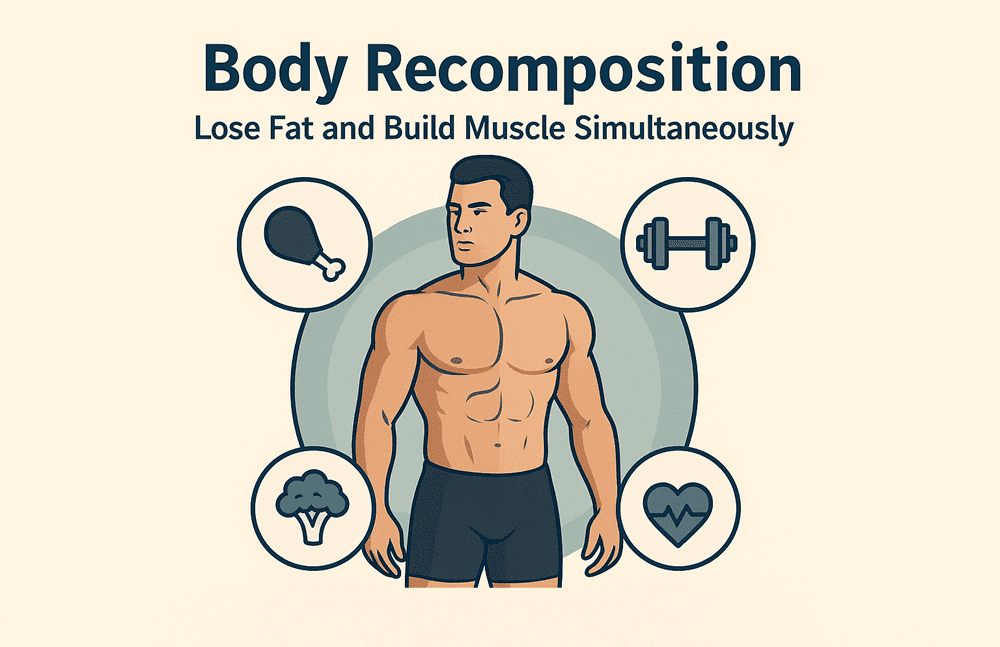
When it comes to fitness goals, most people focus on either fat loss or muscle gain. But what if you could achieve both at the same time? This process, known as body recomposition, is the art of losing fat and building muscle simultaneously. While it’s more challenging than pursuing one goal alone, the right combination of training, nutrition, and recovery makes it possible. In this guide, you’ll learn the science behind body recomposition, practical strategies to get started, and how to optimize your results for long-term success.
What Is Body Recomposition?
Body recomposition refers to the process of reshaping your body by decreasing fat mass and increasing lean muscle mass. Unlike traditional “cutting” or “bulking” phases, recomposition focuses on improving body composition rather than just the number on the scale. This means you may not see dramatic weight loss, but your body will look leaner, stronger, and more athletic.
Who Can Benefit from Body Recomposition?
While anyone can benefit, certain groups see faster results:
- Beginners: People new to resistance training often experience “newbie gains,” making it easier to build muscle while losing fat.
- Returning athletes: If you’ve taken a break from training, your body can quickly regain lost muscle while burning fat.
- Individuals with higher body fat percentages: Extra energy reserves in the form of fat can support muscle growth when paired with proper nutrition.
The Science Behind Body Recomposition
To lose fat, you need to be in a calorie deficit. To build muscle, you generally need a calorie surplus. At first glance, these seem contradictory. However, recomposition works because your body can use stored fat as an energy source to fuel muscle growth when given the right training and nutrients. Research published in the Journal of Strength and Conditioning Research supports that combining strength training with adequate protein intake can improve both fat loss and muscle gain simultaneously (PubMed).
Nutrition for Body Recomposition
Focus on Protein
Protein is the cornerstone of body recomposition. Aim for 1.6–2.2 grams per kilogram of body weight daily. Foods like chicken, fish, eggs, beans, and whey protein shakes are excellent choices. You can also read our article on the benefits of whey protein after workouts to understand how protein supports recovery and muscle synthesis.
Balance Calories
Instead of extreme deficits or surpluses, aim for slight calorie adjustments based on activity levels. Some days you may eat at maintenance, while on heavy training days, a mild surplus helps recovery and growth. Rest days may involve a small deficit to support fat loss.
Prioritize Nutrient Timing
- Pre-workout: Carbs + protein for energy and muscle protection.
- Post-workout: Protein + carbs for recovery and glycogen replenishment.
This balance ensures you’re fueling your workouts while encouraging fat metabolism at other times.
Training for Body Recomposition
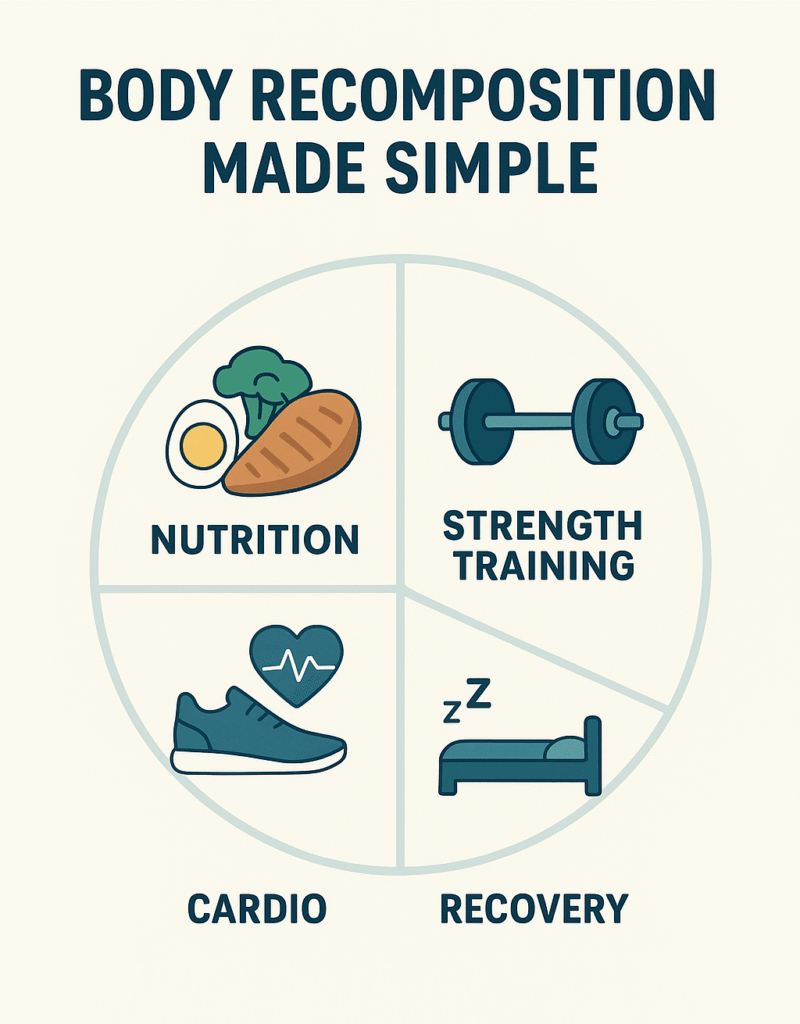
Strength Training Is Non-Negotiable
Resistance training is the foundation. Focus on compound movements like squats, deadlifts, bench presses, and pull-ups. Aim for 3–5 sessions per week with progressive overload — gradually increasing weight, reps, or intensity. For more on this, check out our article on progressive overload techniques.
Incorporate Cardio Strategically
Cardio supports fat loss but too much can interfere with muscle growth. Low-intensity steady state (LISS) cardio, like walking or cycling, can complement strength training without hindering recovery. High-intensity interval training (HIIT) is effective too but should be limited to avoid overtraining.
Recovery Is Key
Muscle grows during rest, not just in the gym. Get 7–9 hours of quality sleep and incorporate active recovery days. Overtraining can stall results and even reverse progress.
Tracking Progress Beyond the Scale
Relying only on weight can be misleading since fat loss and muscle gain may offset each other. Instead, use multiple tracking methods:
- Body measurements (waist, hips, arms, chest)
- Progress photos
- Strength improvements in the gym
- Body composition scans if available
Common Mistakes in Body Recomposition
- Neglecting protein intake: Without sufficient protein, you won’t build muscle efficiently.
- Overdoing cardio: Excessive cardio can burn muscle along with fat.
- Inconsistent training: Sporadic workouts won’t create the stimulus needed for muscle growth.
- Poor recovery: Lack of sleep or high stress disrupts fat loss and muscle gain.
Supplements That Can Help
While not essential, certain supplements may support your recomposition efforts:
- Whey protein for convenient protein intake
- Creatine for strength and muscle performance
- Omega-3 fatty acids for recovery and inflammation control
- Vitamin D for overall health and muscle function
Always consult with a healthcare professional before starting supplements. For more evidence-based insights, visit Examine.com, a trusted resource on supplement science.
The Patience Factor: Why Body Recomposition Takes Time
Unlike rapid fat loss diets, body recomposition is a slow and steady process. Results may take weeks or months to show, but the long-term benefits — sustainable fat loss and lasting muscle gain — far outweigh quick fixes.
Final Thoughts
Body recomposition allows you to reshape your physique by targeting fat loss and muscle growth simultaneously. While it requires careful planning and patience, combining smart nutrition, structured strength training, and recovery strategies can transform your body and performance. Instead of obsessing over the scale, focus on strength, energy, and long-term health improvements.

Pingback: Human Body Types: Ectomorph, Mesomorph, and Endomorph - FitroFuel